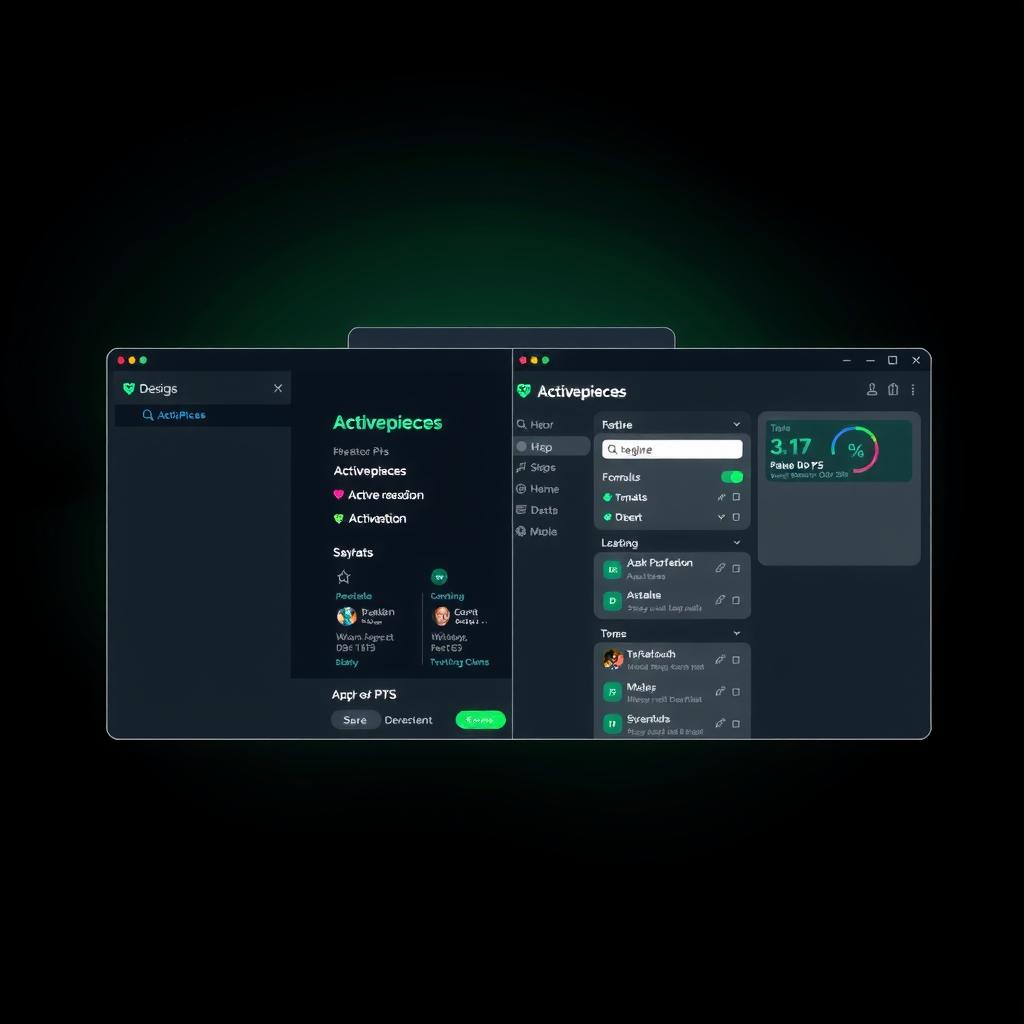
Activepieces vs n8n (2026): Which Open-Source Automation Platform Should You Self-Host?
A head-to-head comparison of Activepieces and n8n — the two leading open-source workflow automation platforms. Covers pricing, self-hosting, AI features, integrations, scalability, and which one fits your team in 2026.
TL;DR: n8n wins for developers building complex, multi-step workflows with 400+ integrations and enterprise-grade features like SSO, audit logging, and queue-mode scaling. Activepieces wins for non-technical teams who want AI agents built in, a cleaner visual builder, and zero-cost unlimited tasks on self-hosted. The right choice depends on your team’s technical depth and whether you need AI-native features out of the box.
Overview
Both Activepieces and n8n are open-source automation platforms that let you connect apps, build workflows, and run them on your own infrastructure. But they’re built for different users.
n8n started as a developer tool and grew into a full platform. It’s been around since 2019, has 600+ nodes (official and community), and runs at companies like Netflix and IBM. Its fair-code license means the community edition is free, but advanced features require a paid license even on self-hosted.
Activepieces launched later but moved fast. It’s MIT licensed (fully open), Y Combinator backed, and designed with a cleaner visual interface. It positions itself as “Zapier but open-source” with a focus on AI agents built directly into the platform.
Let’s break down where each one actually delivers.
Feature comparison
| Dimension | Activepieces | n8n |
|---|---|---|
| License | MIT (fully open) | Fair-code (Sustainable Use License) |
| Self-hosting | Free, unlimited tasks | Free community edition |
| Cloud starting price | Free (1,000 tasks/mo) | €24/mo (2,500 executions) |
| AI features | Native AI pieces, AI agents, MCP servers built-in | AI agent builder, LLM nodes, vector store |
| Integrations | 270+ pieces (connectors) | 400+ nodes (official + community) |
| Visual builder | Clean, Zapier-like drag-and-drop | Node-based, developer-oriented |
| Custom code | Code step (JS/Python) | Full JS + Python nodes |
| RBAC / teams | Cloud plans only | All plans (unlimited users) |
| SSO / SAML | Enterprise cloud | Business plan + Enterprise |
| Audit logs | Enterprise | Business plan + Enterprise |
| Self-hosted advanced features | Community edition only — core features | License needed for SSO, RBAC, advanced insights |
| Multi-instance scaling | Not available | Queue mode + multi-main (Business+) |
| GitHub stars | ~12,700 | ~55,000 |
| Best for | Non-devs, AI workflow builders, small teams | Developers, DevOps, compliance-heavy orgs |
Activepieces strengths
True open source. Activepieces is MIT licensed. You can self-host it, fork it, modify it, and run unlimited tasks for zero cost. No license key, no telemetry requirement, no feature gating on self-hosted.
AI-native architecture. Activepieces treats AI as a first-class citizen. Its “AI pieces” include built-in support for OpenAI, Claude, Gemini, and local LLMs via MCP servers. The AI agent builder is part of the core product, not an add-on. You can create AI agents that read emails, write to databases, and trigger workflows — all without leaving the visual builder.
Cleaner interface. For non-technical users, Activepieces wins on UX. The drag-and-drop builder is more intuitive than n8n’s node-graph approach. Field mapping uses dropdown menus and auto-complete instead of expression syntax. If you’ve used Zapier, you’ll feel at home.
Embedded MCP support. Activepieces lets you hook up MCP (Model Context Protocol) servers directly from the builder. This means you can connect AI tools to your workflows without writing glue code. n8n requires custom nodes or webhooks for the same thing.
Predictable pricing. The cloud free tier gives you 1,000 tasks per month and 2 active flows — enough to test real workflows. Starter paid plans are priced per task, not per execution, which can be cheaper for workflows with many steps.
n8n strengths
Integration depth. n8n’s 400+ nodes cover more ground than Activepieces’s 270+ pieces. For enterprise apps like SAP, Workday, or Salesforce, n8n usually has the dedicated node while Activepieces relies on webhooks or HTTP requests. The community also contributes nodes faster.
Developer tooling. n8n was built for developers. You can write JavaScript and Python code nodes directly in the workflow editor. The expression editor gives you full access to workflow data with autocomplete. You can test individual nodes, inspect execution data at every step, and set breakpoints. Activepieces has code steps, but n8n’s developer experience is noticeably deeper.
Enterprise features. SSO (SAML/LDAP), audit logging, RBAC with project-level permissions, encrypted secrets store, and external secrets from Hashicorp Vault are available on n8n’s Business and Enterprise plans. Activepieces only offers these on its cloud Enterprise plan — self-hosted gets core features only.
Scaling architecture. n8n supports queue mode (multiple workers processing workflows in parallel) and multi-main setup for high availability. This lets you scale from a single Docker container to a Kubernetes cluster handling millions of executions per month. Activepieces doesn’t offer comparable multi-node scaling.
Mature ecosystem. n8n has been around longer and has a larger community: 55,000 GitHub stars, an active forum with 45,000+ members, hundreds of community-created nodes, and extensive documentation. You’ll find more tutorials, templates, and troubleshooting threads for n8n.
Pricing breakdown
This is where the choice gets interesting.
Activepieces:
- Self-hosted: Free (MIT, unlimited tasks, core features)
- Cloud Free: $0/mo, 1,000 tasks, 2 flows, 200 AI credits
- Cloud Starter: from $50/mo, 10,000 tasks, unlimited flows
- Cloud Growth: from $200/mo, 50,000 tasks, advanced features
- Cloud Enterprise: Custom pricing, SSO, audit logs
n8n:
- Self-hosted: Free (community edition, core features)
- Cloud Starter: €24/mo, 2,500 executions
- Cloud Pro: €60/mo, 10,000 executions
- Cloud Business: €800/mo, 300,000 executions
- Enterprise: Custom pricing
- Self-hosted Business: €800/mo, 300,000 executions (same license applied to self-hosted)
Key distinction: n8n prices by “executions” (one execution = one full workflow run regardless of steps), while Activepieces prices by “tasks” (one task = one step in a workflow). For a 10-step workflow, one n8n execution = 10 Activepieces tasks. This means n8n can be cheaper for multi-step workflows.
But for self-hosted, Activepieces is genuinely free with no feature gating. n8n’s self-hosted community edition lacks SSO, RBAC, insights, and advanced error handling — you need the Business license (€800/mo) for those.
When to choose Activepieces
Pick Activepieces if:
- You want true open-source self-hosting with no license costs or feature limits
- Your team is non-technical and prefers a Zapier-like visual builder
- You’re building AI agents and want MCP support built in
- You need unlimited tasks on self-hosted without paying per execution
- You’re a small team or solo founder who wants to keep costs near zero
When to choose n8n
Pick n8n if:
- You need 400+ integrations, especially for enterprise apps
- Your team writes custom code nodes (JS/Python) inside workflows
- You require SSO, audit logging, and RBAC for compliance
- You’re scaling to high-volume production workloads across multiple servers
- You want a mature ecosystem with templates, community nodes, and extensive docs
What about AI features?
Both platforms have invested heavily in AI, but they take different approaches.
Activepieces embeds AI directly into its piece system. You get OpenAI, Claude, Gemini, and local LLMs as drag-and-drop pieces. The AI agent builder is part of the core visual builder. MCP server support means you can connect AI tools to external data sources.
n8n’s AI features are more developer-oriented. It has LLM nodes, vector store integrations (Pinecone, Qdrant, Supabase), and an AI agent builder, but they’re configured through its node system. You have more control but need more technical skill to set them up. The AI Workflow Builder (a new feature) helps non-devs create AI workflows through a chat interface.
If you’re non-technical and want AI automation now, Activepieces has a shorter learning curve. If you’re a developer building custom AI pipelines, n8n gives you more building blocks.
The verdict
There isn’t a single winner — they target different users.
For non-technical teams and solopreneurs: Activepieces is the better choice. The MIT license means genuine free self-hosting, the AI features are more accessible, and the visual builder is easier to learn. You can go from zero to a working AI workflow in an afternoon.
For development teams and compliance-heavy organizations: n8n is the stronger platform. The integration depth, developer tooling, enterprise features, and scaling architecture make it suitable for production workloads that Activepieces can’t yet handle.
The middle ground: If your team has mixed technical levels, consider Activepieces for business users building simple workflows and AI agents, with n8n handling complex backend automation. They can complement each other.
Both platforms are under active development. Activepieces is closing the gap on integrations and enterprise features fast. n8n is simplifying its UI and adding AI features. The gap between them will keep narrowing through 2026 and into 2027.
Disclosure: Some links in this post are affiliate links. We may earn a commission at no extra cost to you.
📖 Related Reads
- ToolBrain — tool reviews, LLM comparisons, and AI workflow guides
- NiteAgent — AI agent development, frameworks, and production patterns
- Hermes Tutorials — Hermes Agent setup, configuration, and advanced workflows
Cross-links automatically generated from NoCode Insider.
Reviews are independent and based on hands-on testing. Some links may be affiliate links — we earn a commission if you purchase, at no extra cost to you. This never affects our recommendations.